
Dr. Joaquin Farias’
Dystonia Recovery Program:
A Complete Platform Guide
Dystonia Recovery Program
Unlocking a New Chapter in Dystonia Recovery
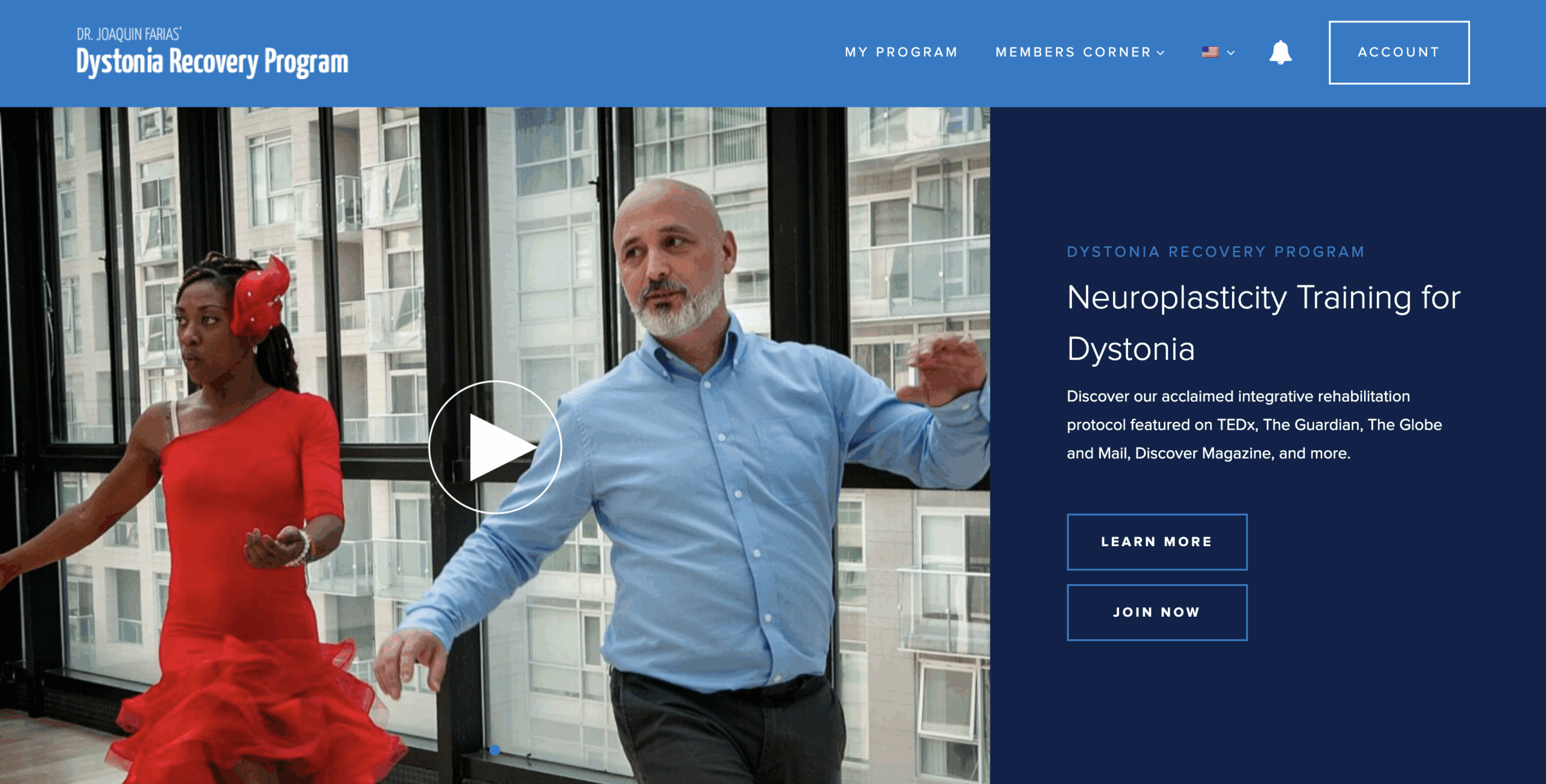
The Dystonia Recovery Program (DRP), created by Dr. Joaquin Farias, brings nearly three decades of his invaluable experience directly to you. Dr. Farias has condensed his expertise into a video-based platform, allowing you to consistently pursue personalized dystonia recovery from the comfort of your own home, free from the constraints of distance or mobility issues.
As a pioneer in dystonia treatment, Dr. Farias has challenged long-held conventional wisdom. Based on clinical experience with over ten thousands of patients, he developed a groundbreaking treatment centered on Neuroplasticity-based Movement Training. This approach introduces new possibilities and hope for dystonia—a condition once considered untreatable.
Rich Content & A Personalized Recovery Experience
The DRP platform offers extensive and rich content, featuring well over a thousand videos available for sequential viewing. We cover all types of dystonia* and provide diverse exercises to support your recovery.
Here’s what makes DRP unique:
- Science-Based Core: While DRP is centered on movement, it differs from traditional muscle-focused therapy. It is rooted in neuroplasticity and neuroscience, introducing training designed to enhance brain function and the nervous system. We intervene from multiple angles to provide comprehensive support for your recovery.
- Flexibility and Safety: As an online platform, DRP offers you the flexibility to choose your own path in a gentle and safe manner. You can integrate your rehabilitation into your favorite daily activities, making recovery a seamless part of your life.
- No Language Barrier**: The DRP platform supports multiple languages. All videos offer subtitles in your chosen language, ensuring smooth and accessible learning.
*Covered Types of Primary Dystonia::
Cervical Dystonia, Leg Dystonia, Blepharospasm, Hand Dystonia, Oromandibular Dystonia, Spasmodic Dysphonia, Meige Syndrome, and Facial Dystonia. Additionally, the platform includes task-specific dystonia types, such as: Musician’s Dystonia, Yips (Golf), and Writer’s Cramp.
**Currently Supported Languages:
English, Spanish, French, German, Italian, Japanese, Korean, Russian, Dutch, Simplified Chinese, Swedish, Portuguese, Polish, Hungarian, Finnish, Danish and Czech.
Who Should Join the DRP Platform?
1. Individuals with Primary Dystonia
DRP is a training platform custom-designed for individuals with primary dystonia, with all rehabilitation methods developed directly from extensive clinical experience. We also warmly welcome those who have dystonia symptoms caused by other conditions (secondary dystonia), or who have conditions such as Parkinson’s, essential tremor, cerebral palsy, or stroke, and wish to explore the benefits of our training.
(Please note: While you are free to utilize the platform’s resources, your specific symptoms and condition may fall outside the core scope of this platform’s research.)
2. Explorers Seeking New Knowledge and Innovative Treatment
DRP is more than just a training platform—it is your starting point for a new understanding of dystonia. Dr. Farias shares the latest insights through direct video instruction, based on our belief that deep understanding of the condition is a powerful therapeutic force in itself. By combining rehabilitation with neuroscience, DRP provides a creative, multi-faceted approach. Feel free to explore and discover the recovery plan that works best for you.
3. Partners Who Need Consistency and Motivation
Recovery from dystonia relies on neuroplasticity, and consistent practice is the crucial force that drives and shapes this change. DRP will be your best tool for recovery. Since all training is presented via video, you won’t need to memorize complex movements or stress over arranging your own routine. Simply set aside time daily to follow the videos for effective recovery, transforming practice from a burden into a seamless part of your life.
Subscription Fees and Plans
The DRP platform offers flexible subscription options, ensuring you can choose the plan that best suits your needs:
- Plan Options:
- Monthly: $35 USD per month.
- Annual: $378 USD per year. Enjoy a 10% discount when choosing the annual plan.
- Payment Methods: All subscription fees can be conveniently paid using a credit card.
- Automatic Renewal & Cancellation: Your subscription will automatically renew according to your chosen plan (monthly or annual). If you decide not to continue, please ensure you cancel before your current term expires.
- Switching Plans: You can manually switch your subscription plan at any time. To switch (e.g., from monthly to annual, or annual to monthly), please cancel your current subscription first, and then simply re-select the new desired plan to resubscribe or convert.
- Account and Progress Retention: Your DRP platform account is tied to your email address. Therefore, even if you cancel your subscription, all records of watched videos and your progress will be fully retained. When you resubscribe, the system will automatically resume from your last point, so there is no need to worry about losing data or starting over.
Exploring Neuroplasticity: How the DRP Platform Works

Many patients and professionals in the medical field often ask: “What exactly is neuroplasticity-based training? And how does it differ from traditional rehabilitation?” As a trainer on the DRP platform, let me share what makes our approach unique.
Challenging Tradition: The Nervous System’s Unlimited Potential
Current mainstream medical treatments for primary dystonia primarily rely on Botox, medication, and surgery. The DRP platform isn’t designed to negate these options; rather, we aim to provide patients with a safe, non-invasive new alternative, offering a wider range of treatment choices. In contrast to the outdated belief that adult neurons cannot regenerate, the core belief of DRP is that our nervous system has the power to reverse its own state of disorder! Through neuroplasticity, our scientifically designed movement training, and diverse sensory stimulation, patients can gradually restore brain and nervous system function and regain lost motor control.
A Dual Approach: DRP’s Innovative Training Model
For too long, dystonia rehabilitation faced a frustrating paradox: despite being a neurological movement disorder, few therapies focused on the nervous system itself. Patients were often told, devastatingly, that “no rehabilitation is needed.” This left individuals and their families feeling abandoned by the system, often sinking into despair without a path forward.
Now, with leaps in neuroscience, our understanding of dystonia is changing. The DRP platform emerged from this new wave, bringing hope and a comprehensive recovery plan designed to target both movement control and core brain function simultaneously. DRP training is divided into two main categories: Movement Training and Brain/Nervous System Function Training.
Targeted Movement Training for Every Type of Dystonia
Movement training forms the core of the entire DRP platform. Dr. Farias’s decades of clinical practice reveal that active movement by the patient is key to inhibiting and reshaping neural circuits, making it the most effective rehabilitation method for dystonia. We know that establishing and strengthening specific neural pathways requires multiple neurons to fire simultaneously—a critical process achievable only through the patient’s active participation. To secure these neural connections and ensure continuous optimization, repetitive practice is essential, as it is the fundamental condition for triggering neuroplasticity and enabling the brain to relearn and adapt.
The DRP platform guides patients toward functional recovery based on these principles. Every type of dystonia has its own dedicated movement exercises, conducted in a gentle, progressive manner. This precise curriculum, informed by Dr. Farias’s vast clinical experience, is designed around the underlying patterns he identified: despite the complex variety of surface symptoms, every dystonia type affects specific, corresponding nerves and muscles. Accurately distinguishing and understanding these common patterns is a major breakthrough in dystonia rehabilitation.
Once the pattern is understood, the next step involves neuroplasticity-based movement training targeting specific nerves and muscles. Unlike traditional muscle-focused rehabilitation, DRP’s movement training emphasizes establishing proper neural circuits, suppressing compensatory pathways, and inhibiting overactive primitive reflexes. Through neuromodulation and neural stimulation, we reduce overactive circuits and activate those below the threshold—effectively identifying underworked circuits, redistributing their activity, or increasing regional activity. Furthermore, neural differentiation fine-tunes perceptual abilities, teaching control over movement range, intensity, and speed to enhance motor control. Finally, neural relaxation is an indispensable part of the process; weaker neural circuits require appropriate rest to recover. Mastering the timing and frequency of rest is absolutely critical to successful recovery through neuroplasticity-based movement training.
Making Practice Fun! In addition to the specific movement training for each dystonia type, DRP subtly incorporates these actions into dance, assisting patients in rediscovering lost movements through music and rhythm. Dance is an exceptional tool because music provides an external sensory signal that stimulates movement-related brain regions. This signal helps bypass the damaged internal motor control circuits, guiding the patient to rebuild the body-movement connection through rhythm. DRP offers a diverse range of dances and mind-body practices, allowing patients the freedom to choose enjoyable ways to engage in their rehabilitation. When recovery transcends repetitive tasks and becomes a source of pleasure, the results are significantly more pronounced. <Read More>: A video of a patient undergoing dance rehabilitation
Innovative Training for Brain Function and Nervous System Balance
The DRP platform is a highly creative and forward-thinking system when it comes to enhancing brain function and nervous system balance. Rooted in deep neuroscience, it integrates training for the brain and nervous system with auditory, visual, and other sensory stimulation, resulting in diverse and engaging exercises. The benefits of this training are extensive: they not only aid individuals with dystonia but are also applicable to anyone looking to maintain or improve brain function, offering particular advantages for seniors.
Why is this essential for dystonia patients? Through years of clinical experience, Dr. Farias found that the difficulties faced by those with dystonia are not limited to movement disorders. Their brain function and nervous system are similarly affected, leading to a range of non-motor symptoms such as insomnia, anxiety, social difficulties, poor concentration, and even a decline in overall cognition, memory, and conceptualization. Past treatments often attributed these issues to psychological factors, mistakenly viewing dystonia as merely an emotion-driven illness. However, the new medical understanding recognizes these so-called “other” symptoms as crucial components of the disease. Therefore, simultaneously improving the state of the brain and nervous system is vital, as this directly enhances motor control ability. This comprehensive, two-pronged approach is necessary for fundamental, lasting improvement.
Eye training is an extremely important core component of dystonia rehabilitation for improving brain function. New research indicates that individuals with dystonia often have poor eye function, experiencing difficulties with eye-tracking and peripheral vision, which may be root causes of neck and eyelid movement disorders. However, eye movement disorders are frequently overlooked by doctors and rarely treated. Consequently, the DRP platform incorporates a comprehensive eye training program, combined with balance and vestibular training, designed to address these issues fundamentally. The benefits of eye exercises extend beyond this: they strengthen overall brain function, improve communication between the two brain hemispheres (a common deficiency in dystonia), and enhance cognitive ability, focus, and social skills. Notably, DRP’s exercises are not only practical but highly artistic; pairing visual practice with appropriate auditory stimulation yields significantly better results than visual practice alone—a testament to the unique design of DRP’s rehabilitation method.
Training related to nervous system balance primarily involves breathing and relaxation exercises, which make up a substantial portion of the DRP platform. When the sympathetic nervous system (responsible for stress and danger response) is imbalanced with the parasympathetic nervous system (responsible for rest and digestion), it can trigger multiple non-motor symptoms, including sleep disorders, emotional regulation difficulties, digestive issues, and fatigue—all highly prevalent among dystonia patients. Furthermore, due to diaphragm spasms, many patients experience involuntary breath-holding, shallow or rapid breathing, or even shortness of breath (Dyspnea). This is why the DRP platform features extensive breathing exercises, helping patients actively regulate their nervous system balance through conscious breath control.
Assessment and Rehabilitation, All in One!
How can an online platform like DRP be effective for patients with diverse symptoms and stages? The key is using tools that serve a dual purpose: assessment and treatment. Through practice, you can self-assess your deficits in movement, focus, and visual function, and then adjust your plan accordingly. Since your symptoms change as you progress, this self-evaluation ensures you always know what to strengthen next.
Now, let’s explore the exciting features of the platform!
DRP Platform User Guide
As a long-time user of the DRP platform, I can tell you that even after years, I still find it both practical and engaging—mainly because it integrates so well into daily life! Dystonia recovery is a marathon, not a sprint. The most effective rehabilitation plan is one that blends seamlessly into your daily routine, providing the support you need, every step of the way.
The DRP platform offers more than just knowledge and training; it can be your constant companion throughout the day! Start your morning with meditation and breathing exercises. Take advantage of the daylight for a brisk walk and some nature exposure. In the afternoon, take a short rest before doing movement training, perhaps paired with a session of dance or Tai Chi. When evening comes, wind down with soothing music and relaxation activities to help you sleep. You will always find a suitable video or piece of music to accompany you!
The DRP platform currently features thousands of videos and is continuously growing. While this vast library is a major strength, it can sometimes feel overwhelming. Many new users feel lost, unsure of where to begin. Therefore, the following guide will introduce you to the platform’s structure and rules, helping you get started quickly and saving you time.
DRP Platform Structure
To start, here is a quick overview of the DRP platform’s architecture. The platform is organized into seven color-coded modules. Excluding the initial module (for platform introduction) and the final module (dedicated to instruments and golf), the core content is divided into five main categories: Exercise, Dance, Relaxation, Education, and Workout.
These five categories are further divided into several Sub-Categories, with each Sub-Category containing multiple Videos. This creates a three-tiered structure: Category → Sub-Category → Video.
Important Note: Sub-Categories are unlocked sequentially based on your subscription duration. Fundamental or simpler lessons appear early, while supplementary or advanced practices become available later in your program.
-
Front Desk:Platform Guide and Virtual Clinic
-
Five Main Categories:
- Exercise: Targeted movement training designed for different dystonia types, plus breathing and sensory stimulation exercises.
- Dance: Integrating movement training into various dance styles.
- Relaxation: Qigong, Yoga, Meditation, Hypnosis, Breathing exercises, and music for therapeutic benefit.
- Education: Compiling classes, lectures, expert interviews with Dr. Farias, and knowledge sharing on topics like nutrition, emotion, and sleep, alongside patient testimonials.
- Workout: Shaolin Kung Fu, Boxing, Balance, Drums, Juggling, Core Training, Awareness, and Rhythm.
-
Instruments & Golf: Violin, Guitar, Clarinet, Saxophone, and Golf.
DRP Video Release Rules
Now for the most important part!
The DRP subscription model works much like Netflix, where videos are released over time. A crucial rule governs this release:
After watching any video, you must remember to click the “Mark as Completed” button. The next video will only be unlocked seven days later. If you do not perform this action, the subsequent video will not be released.
When you first join, you will receive several initial videos across different sub-categories in the first week. We strongly recommend clicking through the blue “Next up for you“ videos every time you open the platform to unlock them, preventing unnecessary waiting when you are ready to watch.
This seemingly restrictive rule is actually central to the DRP platform’s design, intended to help you build a personalized rehabilitation plan step-by-step. As mentioned before, the platform uses tools and exercises that serve both assessment and treatment purposes. We encourage patients to try all exercises to discover where they face challenges and then practice consistently. Releasing too much content at once can cause information overload and hinder focus. This progressive design, particularly for the dedicated dystonia movements, ensures a safer recovery process, as over-practicing can overload neural circuits and worsen symptoms.
Therefore, the best strategy is to unlock all available videos in the first round and go through all the exercises once. Afterward, focus on persistent practice for the movements you find most challenging. If a video is extremely difficult, don’t rush—you can pause and practice it repeatedly for several weeks before moving on. Active participation and creating a plan that fits you are the core of rehabilitation.
Knowledge Is Treatment
Years of experience in dystonia movement training have convinced me that “Knowledge is Treatment.” While the mainstream medical understanding of this condition still has its limitations, Dr. Farias’s firsthand research and clinical experience are invaluable. I believe the most valuable aspect of the DRP platform, beyond the movement training, is the rich educational resources. Under the Education category, you will find Dr. Farias personally explaining the full landscape of dystonia, offering a deep understanding from the complexity of the symptoms to the underlying scientific principles. Additionally, if you are interested in the latest dystonia news, you can find many current updates on the BLOG.
Can I Ask Questions?
Yes!
The DRP platform has an excellent team ready to answer your questions. Before posting, however, we recommend browsing similar questions other members have asked.
You have two ways to ask questions:
1. Video-Specific Questions: If you have questions about the content of a specific video, please leave a comment directly in the comment section beneath that video. DRP moderators, Dr. Farias, or other trainers will reply there. You can click the green notification bell below your comment to choose whether to receive email alerts for replies.
2. General Questions: For questions about platform usage, technical support, or specific training guidelines, please click “Members Corner” → “Forum“ in the top menu. You can find detailed instructions and engage with other members in the dystonia community forums.
Virtual Clinic
We understand it can be difficult to find experienced therapists, nutritionists, psychotherapists, or counselors in your local area. The DRP platform offers online, one-on-one consultation and training sessions. Experts from various fields will guide and assist you in creating a comprehensive and personalized rehabilitation plan.
DRP Platform: Core Training Principles
For detailed guidelines, suggested practice times, and even daily schedules for all dystonia types, please refer to the DRP platform’s top menu: “Members Corner” → “Forum” → “Training Guidelines and Instructions.” This section offers a simple overview for those who haven’t yet joined, providing a snapshot of the dystonia recovery training approach. Since every patient has unique habits, work, and daily routines, the most effective rehabilitation method is one that integrates seamlessly into your life and is maintained with regular consistency.
Here are the overall recovery principles for all types of dystonia:
-
View Dystonia Holistically: Recognize that dystonia is a systemic, neurological imbalance, not just a movement disorder in a single body part.
-
Comprehensive, Multi-faceted Therapy: Training extends beyond the affected area to cover the entire body. Common required elements include:
-
Daily Training: Practice for at least 45 minutes daily. In addition to specific exercises, this must include breathing, eye training, and sensory stimulation, which are essential components for all types of training.
-
Dance: Dedicate at least 15 minutes daily to dance, enjoying the activity while improving your symptoms.
-
Relaxation Practice: Perform relaxation exercises at least once per day (e.g., Qigong, Tai Chi, or meditation) to help the brain
adapt to a relaxed response. The best time is before sleep or after neuro-stimulation training (like dance or movement exercises). -
Go Slow & Listen to Your Body: Do not overtrain! Start slowly and practice only within your comfort range, as excessive exercise can worsen symptoms. For those with severe symptoms, we recommend prioritizing relaxation exercises early on, spreading practice time throughout the day, and ensuring adequate rest.
-
Phase-Based Training: All training is divided into two phases:
-
Diagnostic Phase: Try all exercises to identify the ones you find most challenging.
-
Rehabilitation Phase: Focus on practicing the most difficult movements daily while alternating easier exercises to maintain overall function.
-
Neural Retraining: Restore proper function by consciously, slowly, and precisely repeating movements to retrain the connection between the brain and muscles.
If you have questions about setting up your personalized practice plan or daily self-care, you can schedule a one-on-one consultation through the Virtual Clinic with a DRP platform expert. Additionally, Dr. Farias hosts different dystonia seminars annually. In these group settings, Dr. Farias provides case-specific guidance, and you gain deeper insight into the condition through community discussion.
Join DRP and Begin Your Journey to Recovery!
The road to dystonia recovery is never one you have to travel alone.
The DRP platform offers more than just professional training; it is a community filled with hope and warmth.
We sincerely invite you to join us on this journey, making rehabilitation less of a burden and more of an opportunity to reclaim your bodily autonomy and regain control of your life.